
How to Set Up WPForms and WP E-Signature

In this article, you'll learn how to automatically collect digital signatures on contracts after a WPForms submission using WP E-Signature.
A WP E-Signature Elite or Lifetime license is required to integrate with WPForms and collect legally binding, UETA/ESIGN compliant signatures.
If you're using version 1.9.4.1 or earlier, the screenshots in this article are not exact for you, but the steps are the same. We'd recommend updating to version 2.0 to get the best out of WP E-Signature. 👏
Step 1. Download and install the required plugins
Before you can collect legally binding signatures with WP E-Signature and WPForms, make sure the following plugins are installed and activated:
- WP E-Signature + WP E-Signature Business add-ons plugin (both come with the Elite or Lifetime license)
- WPForms
- WPForms E-Signature Contract add-on (Visit E-Signature > Add-ons > Integrations)
Step 2. Create a stand alone document
Hover over E-Signature > Add New Document, enter a document name, select Stand Alone, then click Next. Type or paste in your document text.
Step 3. Insert WPForms data into the document
In this step, you can add fields that pull submitted form data into your document. If you don't need form data in your document, skip to step 4.
To add WPForms data, click Add Fields and select WPForms Data. From the dropdown, choose your WPForm > Next Step, select your form field (or insert all fields), choose your display option, then click Add to Document.
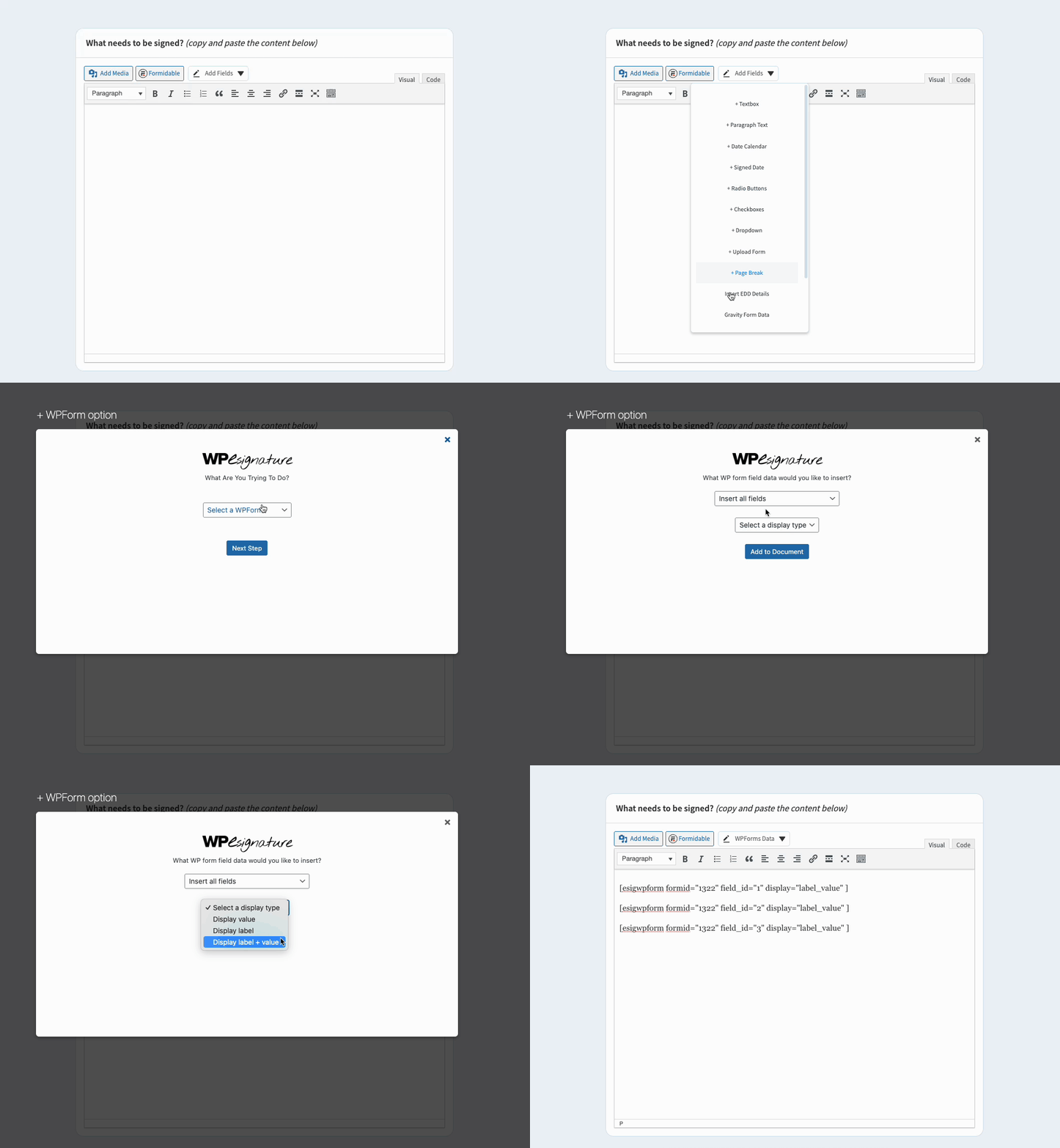
A shortcode will be generated as a placeholder for each field, and the actual values will display once the form is submitted. The field will look like this in your document: [esigWPForm formid="3" field_id="1"]
You can move these shortcodes anywhere in your contract to display the submitted data wherever the shortcode is placed.
Step 4. Assign your document page and choose your settings
The only required option is assigning the stand alone document to a page. You can either select an existing page from the Display on this page dropdown (if you already created a blank page), or create a new WP page for the document.

Add any document options you need, such as activating signing reminders or adding a custom message to the confirmation email.
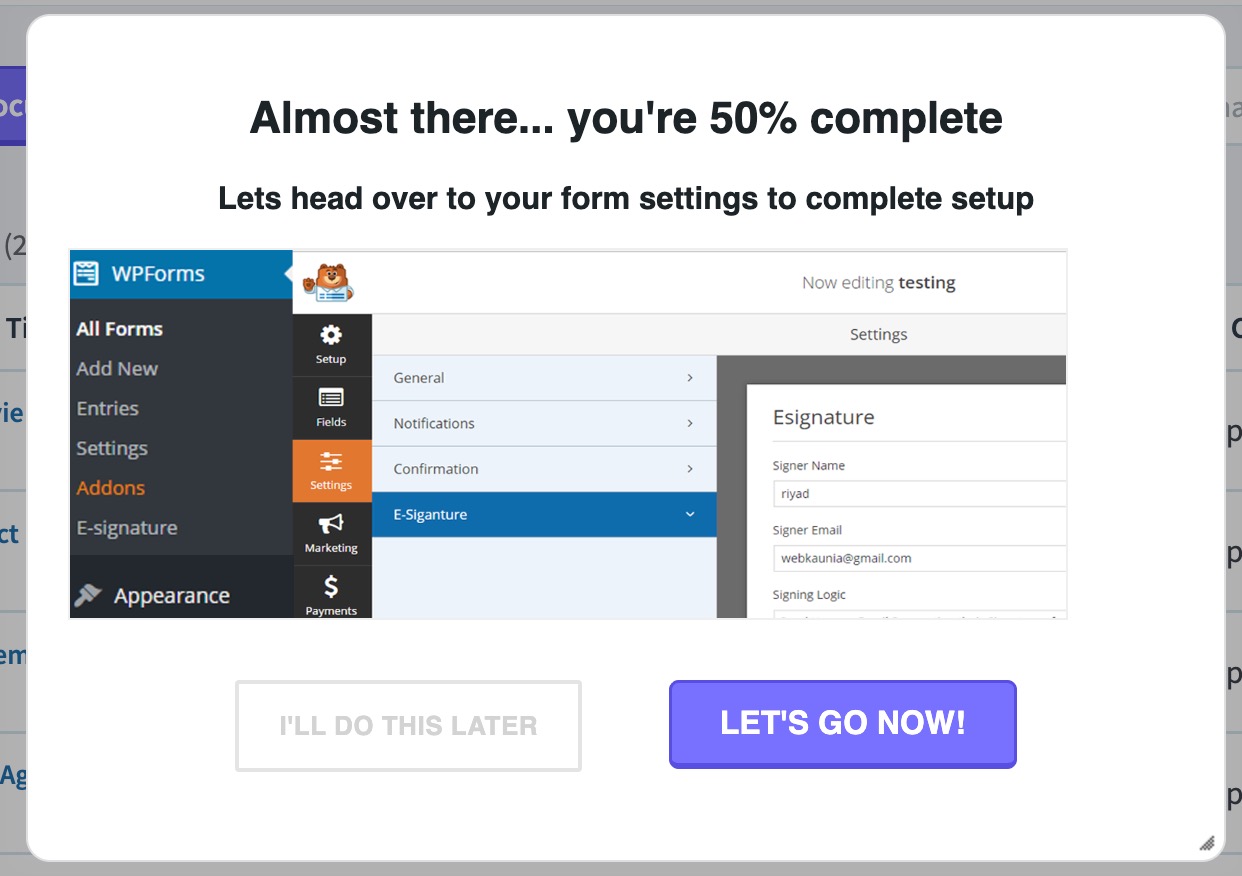
Step 5. Finish configuring the E-Signature WPForms workflow settings
If you clicked Let's Go Now, you're already on the correct page. If not, go to WPForms, find your form > Edit > Settings > E-Signature.
To complete these settings, select Show Smart Tags, choose your signer name field, choose your signer email field, choose your signing logic, choose your document, and save.

Step 6. Submit your form and sign a test document
Place your WPForm on a WordPress page or open it in preview mode, fill it in as a signer would, and submit to trigger and sign a test document.
Try our WP E-Signature + WPForms demo here.
Still have questions? Connect with a support hero.